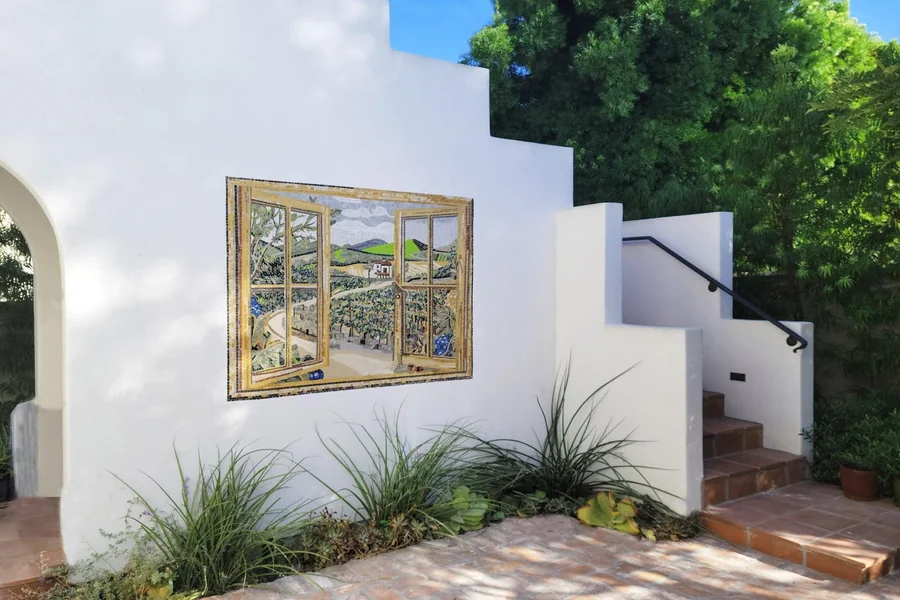
The renewed fascination with mosaics in contemporary architecture is one of the most interesting visual stories of this design era. What was once seen purely as a heritage craft tied to ancient basilicas or Byzantine palaces has transformed into a powerful design tool capable of shaping the mood, identity, and even the environmental performance of a structure. Today’s architects and designers are rediscovering the material’s potential, using it not simply as decoration but as a structural, conceptual, and narrative element. From ultra-minimalist residences to monumental public works, mosaics are entering a golden age once again, guided by advanced fabrication technologies, new material palettes, and a generation of designers eager to merge art with architecture.
This is how today’s architects are incorporating mosaics into groundbreaking projects around the world.
Reimagining Facades as Public Art
In recent years, building facades have shifted from flat, blank exteriors into dynamic visual fields. Mosaics play an instrumental role in this transformation, offering infinite variation without sacrificing durability. Architects are increasingly using them as cladding for exterior walls, applying small tesserae across vast surfaces to create kinetic and textural skins for buildings.
Unlike paint or coated metal panels, mosaics interact with natural light in constantly shifting ways. Glass and ceramic pieces refract sunlight through the day, giving the structure a kinetic quality as the environment changes. This living surface offers architects a chance to design buildings that speak to their surroundings rather than oppose them. The technique is especially prevalent in civic and cultural institutions, where the building itself becomes a landmark. Schools, libraries, theaters, and museums are embracing mosaic facades that depict abstract gradients, topographic patterns, or pixel-like imagery that can be seen from a distance.
In warmer climates, mosaic facades also serve a practical purpose. Light-colored tesserae reduce heat absorption, and the textured surface minimizes glare while maximizing cooling airflow. Combined with today’s high-performance adhesives and substrates, mosaic exteriors provide longevity and weather resistance that rival stone or concrete finishes.
Interior Walls That Blur Art and Architecture
While exterior mosaic applications make bold public statements, interior mosaics create quieter yet equally compelling experiences. Designers increasingly treat whole walls as immersive installations that seamlessly integrate with the architecture rather than hang as separate artworks.
This technique is especially powerful in hospitality environments, where lobbies, bars, and spa corridors are designed to transport visitors emotionally. A mosaic wall can evoke the shimmer of water, the density of a forest, or the geometry of urban life. The medium allows for subtle graduations in color and texture that paint or wallpaper cannot match. In luxury residences, interior mosaics often appear in entryways, stairwells, and double-height living rooms, acting as bespoke focal points that anchor the visual narrative of the home.
One of the major reasons for this shift is the evolution of production capabilities. Companies such as Mozaico and other contemporary makers now combine handcrafted detail with advancements of AI when it comes to modeling clients’ vision. Architects can design custom walls that align perfectly with spatial proportions, furniture layout, and lighting strategy.
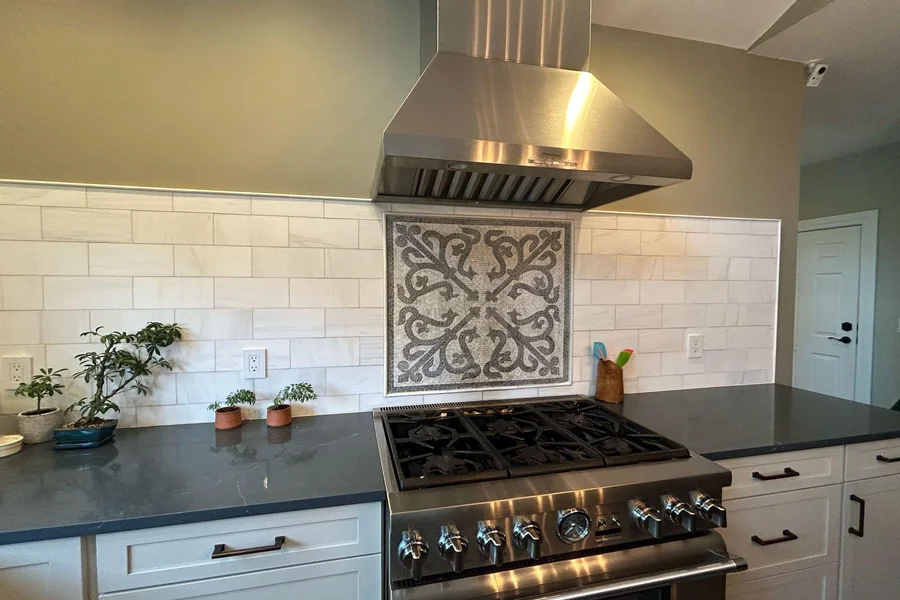
Floors That Combine Durability and Expression
Perhaps the most traditional home for mosaics, flooring, has undergone radical redefinition in recent years. Designers are rediscovering the structural and conceptual possibilities of mosaic flooring beyond the classic Roman-style patterns. Today’s projects feature everything from monochromatic terrazzo-inspired surfaces to elaborate, sprawling compositions that stretch across entire rooms.
What makes mosaic flooring particularly relevant today is its extraordinary durability and repairability. In commercial settings where foot traffic is constant, for example, hotels, airports, retail complexes, mosaic floors offer a long-lasting alternative to poured concrete or large-format tiles that can show wear over time. The smaller components of mosaic systems distribute stress more evenly, making the surface resistant to cracking. Should damage occur, localized repairs are far less invasive and more visually seamless.
Aesthetically, mosaic floors allow architects to create continuity across large spaces while introducing subtle directional cues. By using gradients in tile size, tone, or sheen, designers can guide movement, highlight circulation paths, or delineate zones without relying on walls. Some designers even embed symbolic references or abstract patterns into their floors, turning circulation areas into visual stories experienced through motion.
Creating Sculptural Surfaces in Bathrooms and Spas
Bathrooms and wellness retreats are perhaps the most poetic expressions of mosaics in contemporary design. The reflective quality of glass mosaics, the soft texture of natural stone, and the playfulness of metallic tesserae combine to create atmospheres that feel serene and tactile.
Curved surfaces in particular are reshaping the way architects design wet rooms. Mosaics can conform to organic shapes more easily than larger tiles, allowing for bathtubs carved from continuous curves, wave-like shower walls, or softly rounded sauna rooms enveloped in tonal mosaics. This flexibility has opened the door to sculptural spatial concepts that were once difficult to achieve with rigid materials.
Moreover, mosaics excel in humid environments. Their modular scale allows designers to create surfaces that resist cracking and maintain watertight integrity. Modern grouts and sealants enhance longevity, making mosaic-clad wellness spaces both functional and luxurious.
In high-end spas, designers are now embracing mosaics that mimic natural phenomena, such as shimmering water reflections, sand dunes, geological veining, which resonate with the wellness ethos of grounding, calm, and sensory presence. When paired with thoughtful lighting, these installations blur the boundaries between surface and sculpture, transforming utilitarian rooms into sensorial sanctuaries.
Mosaics in Landscape and Urban Design
Beyond the interior realm, mosaics have become powerful tools in landscape architecture and urban planning. Public plazas, pedestrian walkways, benches, fountains, and garden paths increasingly employ mosaics to create cohesive visual narratives that unify built and natural environments.
One of the major advantages of mosaics outdoors is their resilience. Stone and porcelain mosaics withstand freeze-thaw cycles, UV exposure, and heavy use with minimal degradation. Their small scale allows them to adapt to terrain variations and curves, making them ideal for organic landscape shapes or sloping public spaces.
Urban designers often use mosaics to embed local identities into public infrastructure. Patterns inspired by regional textiles, traditional craft, or natural topography help create a sense of place. In cities aiming to strengthen cultural identity through public art, mosaics serve as a medium that can be both artistic and functional, merging storytelling with everyday architectural elements.
In contemporary gardens, mosaics act as subtle punctuation points. Designers may use them to highlight transitions between zones, introduce reflective accents near water features, or create meditative seating areas. Their tactile presence adds depth and intimacy to outdoor environments, encouraging touch and slowing down the pace within nature.
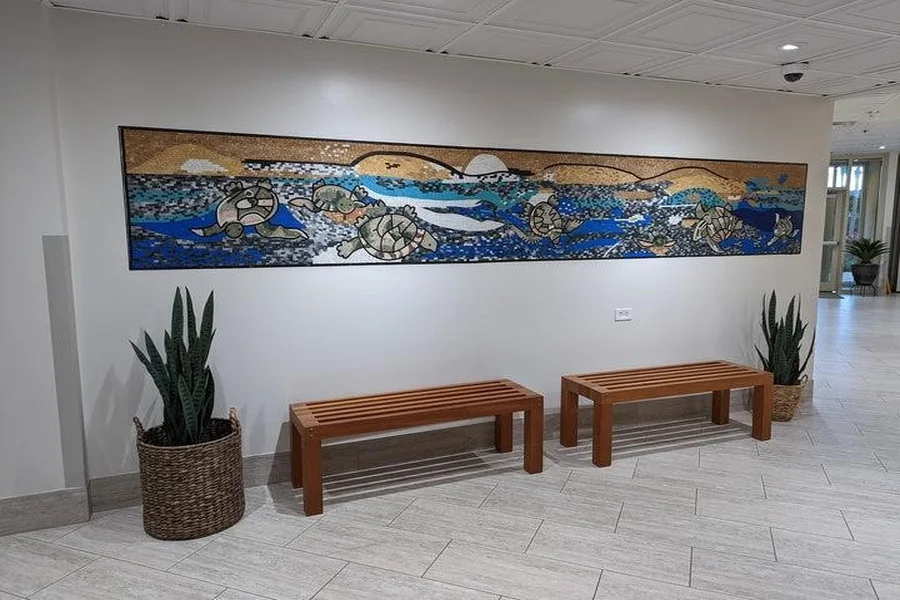
The Rise of Architectural Installations and Feature Artworks
As the boundaries between art, design, and architecture blur, mosaics are increasingly used to create large-scale installations that become the centerpiece of a building’s identity. These installations often take the form of suspended structures, three-dimensional volumes, or expansive surfaces that wrap entire architectural elements.
One of the fascinating developments in this sphere is the use of unconventional materials. Designers are experimenting with recycled glass, mirrored components, metal inlays, and mixed-media tesserae to achieve effects that transcend traditional mosaic expectations. The shift toward sustainability has also fueled the use of upcycled materials, turning discarded fragments into high-design visual compositions.
Architectural installations often aim to generate emotional impact, framing the mosaic not just as a surface but as a medium that can carry cultural, ecological, or conceptual narratives. When executed at this scale, the mosaic becomes a spatial experience rather than a decorative one. The viewer engages with it through movement, light, and proximity, much like encountering sculpture in a gallery.
Because mosaics allow for infinite variation in texture, color, and reflectivity, they offer architects an unparalleled medium for creating installations that transform the character of a room or building. Whether the goal is to diffuse sunlight through a jewel-like wall, create a shimmering canopy overhead, or carve geometric shadows into circulation spaces, mosaics provide the versatility required to push spatial boundaries.
Digital Design Meets Handcrafted Detail
The renaissance of mosaics in modern architecture is largely a result of technologies that allow designers to move between digital precision and artisanal craftsmanship. Advanced software now enables architects to convert drawings, photography, or generative patterns into detailed mosaic plans with astonishing accuracy. These systems map out the placement of millions of individual tiles, optimizing the design for color gradients, scale, and production efficiency.
At the same time, many projects still rely heavily on manual execution. Artisans bring depth and sensitivity to each installation, responding to subtle shifts in tone and texture that algorithms may not fully capture. It is this synergy of digital planning paired with human intuition that defines the new era of mosaic design.
As demand for complex patterns grows, the market for specialized production has expanded. Skilled makers capable of producing customized mosaics collaborate with architects on ambitious projects, bridging the gap between concept and construction. This blend of innovation and craft resonates strongly with today’s design culture, which values both high-tech capabilities and the warmth of artisanal work.
Sustainability and the Life Cycle Appeal
While mosaics are often appreciated for their beauty, they are equally compelling from a sustainability standpoint. Their long life cycle alone is a major advantage. Unlike surfaces that require replacement every decade or two, mosaic applications can last for generations, maintaining visual integrity with minimal upkeep.
Many contemporary studios are also prioritizing eco-friendly materials, incorporating recycled glass, locally sourced stone, and low-VOC adhesives. Production processes have become more energy efficient, while supply chains have become increasingly transparent.
Furthermore, mosaics allow designers to minimize waste. Because tesserae are small, leftover material from slabs or tiles can often be repurposed. This circular approach aligns with the broader architectural movement toward responsible material use and waste reduction.
In adaptive reuse projects, mosaics play a unique role by helping bridge historical and contemporary aesthetics. They can introduce modern patterns while honoring the craftsmanship of earlier architectural eras, creating continuity between past and present.
A Medium for Identity-Driven Design
As brand storytelling becomes integral to architecture, mosaics have emerged as powerful tools for translating identity into built form. Their capacity for detail allows designers to embed subtle symbolic references or create large-scale visual signatures that frame a building’s narrative.
Luxury hotels use mosaics to anchor regional identity, weaving local color palettes or cultural motifs into guest areas. Retail brands incorporate mosaic installations to create memorable touchpoints that enhance the customer experience. Corporate spaces use them to reinforce themes of innovation, craftsmanship, or heritage.
Because mosaics can adapt to any aesthetic, they offer a level of versatility unmatched by many other architectural finishes. They can frame spaces quietly or announce them boldly, depending on the project’s intention.
This identity-driven approach reflects broader shifts in architecture, where buildings are increasingly designed to tell stories and evoke emotional responses. As a narrative medium, mosaics are uniquely positioned to communicate meaning without sacrificing elegance or durability.
A Contemporary Language from an Ancient Craft
The story of mosaics in modern architecture is not a tale of revival, but of reinvention. The medium’s return to the forefront is driven by innovation as much as by tradition. By merging ancient techniques with contemporary design philosophies and digital technologies, architects have unlocked a new vocabulary for expressive, enduring, and sustainable architecture.
Mosaics today are no longer confined to decorative borders or historic restorations. They define facades, sculpt interior worlds, shape landscapes, and create immersive installations. They adapt to complex geometries, respond to natural light in dynamic ways, and offer longevity that rivals the most advanced building materials.
Most importantly, mosaics bring humanity back into architecture. They carry the imprint of the hand even when guided by digital precision. They evoke a sense of time, permanence, and artistry: qualities increasingly cherished in a world dominated by fast construction and disposable materials.
As contemporary design continues to celebrate both craft and innovation, mosaics will remain a transformative element in architectural practice. Their expressive possibilities are limitless, and their presence in modern projects signals a future where beauty, sustainability, and craftsmanship coexist seamlessly.